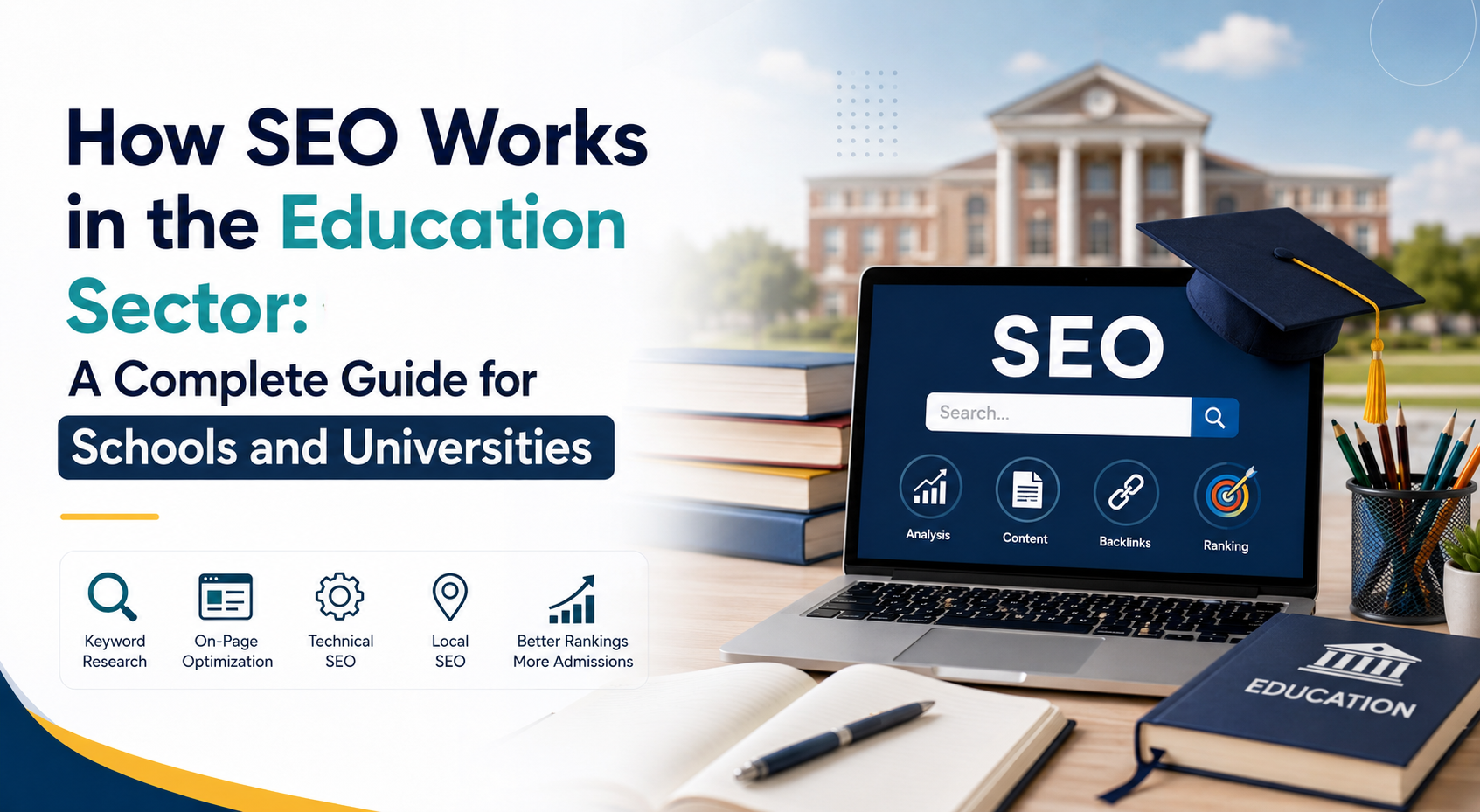
The education sector has become highly competitive in the digital world. Schools, colleges, universities, coaching centers, and online learning platforms are all competing for visibility on search engines. Students and parents now search online before making admission decisions, which makes Search Engine Optimization important for every educational institution.
A strong SEO strategy helps educational websites rank higher on Google, attract targeted traffic, and increase student inquiries. This guide explains how SEO works in the education sector and how schools and universities can improve their online presence effectively.
What Is SEO in the Education Sector?
SEO in the education sector refers to optimizing educational websites so they appear higher in search engine results. When students search for terms like “best engineering college,” “online MBA programs,” or “schools near me,” SEO helps institutions appear in those search results.
The main goal of education SEO is to:
- Increase website traffic
- Improve online visibility
- Generate student inquiries
- Build trust and authority
- Improve admissions and enrollments
Educational institutions that invest in SEO can reach students at the exact moment they are searching for courses or academic information.
Why SEO Is Important for Schools and Universities
Most students begin their education journey online. They compare institutions, read reviews, check rankings, and explore course details before making decisions.
Here are some major reasons why SEO matters for educational institutions:
1. Better Online Visibility
Appearing on the first page of Google increases visibility and credibility. Most users rarely visit the second page of search results.
2. Increased Student Admissions
SEO helps attract students who are actively searching for educational programs, increasing the chances of admissions.
3. Cost-Effective Marketing
Compared to paid advertisements, SEO provides long-term traffic without continuous advertising costs.
4. Improved Trust and Authority
A well-optimized website with quality content builds trust among students and parents.
5. Competitive Advantage
Institutions with strong SEO strategies often outperform competitors in search rankings and online engagement.
How SEO Works for Educational Websites
SEO works through multiple optimization techniques that help search engines understand and rank websites.
Keyword Research
Keyword research is the foundation of SEO. Educational institutions must identify what students are searching for online.
Examples of education-related keywords include:
- Best medical colleges in India
- Online certification courses
- MBA admission process
- Top engineering universities
- Distance learning programs
Using the right keywords across website pages helps improve rankings for relevant searches.
On-Page SEO for Education Websites
On-page SEO focuses on optimizing individual pages.
Optimize Title Tags and Meta Descriptions
Every page should include relevant keywords in titles and descriptions.
Example:
Title: Best Business School Programs for International Students
Meta Description: Explore top business school programs, admission requirements, and career opportunities.
Create High-Quality Content
Educational websites should publish valuable and informative content such as:
- Course details
- Admission guides
- Career advice
- Scholarship information
- Student success stories
- Blogs and FAQs
Helpful content improves engagement and search rankings.
Use Proper Heading Structure
Using headings like H1, H2, and H3 improves readability and helps search engines understand the page structure.
Optimize Images
Images should include descriptive file names and alt text to improve accessibility and SEO.
Technical SEO for Educational Institutions
Technical SEO improves website performance and user experience.
Mobile-Friendly Design
Most students use mobile devices to browse educational websites. A responsive website improves usability and rankings.
Fast Loading Speed
Slow websites increase bounce rates. Educational websites should optimize images, hosting, and coding for better speed.
Secure Website
Using HTTPS encryption helps protect user data and improves trust.
Structured Data
Schema markup helps search engines understand course details, reviews, events, and FAQs more effectively.
Local SEO for Schools and Colleges
Local SEO is essential for schools, colleges, and coaching institutes targeting students in specific areas.
Google Business Profile Optimization
Educational institutions should create and optimize their Google Business Profile with:
- Correct address
- Phone number
- Website link
- Photos
- Reviews
Local Keywords
Using location-based keywords improves visibility in local searches.
Examples:
- Best school in Delhi
- Coaching institute in Mumbai
- University near Bangalore
Student Reviews
Positive reviews improve credibility and local rankings.
Content Marketing in Education SEO
Content marketing plays a major role in attracting students.
Educational Blogs
Publishing blogs helps answer student questions and improve organic traffic.
Examples include:
- How to choose the right college
- Career options after graduation
- Tips for entrance exam preparation
Video Content
Video tutorials, campus tours, and webinars increase engagement and time spent on the website.
Frequently Asked Questions
FAQ sections help answer common queries and improve voice search visibility.
Voice Search and Education SEO
Voice search is growing rapidly with the use of smartphones and voice assistants.
Students now search using conversational phrases such as:
- Which university offers the best MBA program?
- What are the top online courses for digital marketing?
- How can I apply for scholarships?
To optimize for voice search:
- Use natural language
- Create FAQ pages
- Focus on long-tail keywords
- Improve mobile optimization
Voice search optimization helps educational websites appear in featured snippets and voice assistant results.
AI and SEO in the Education Sector
Artificial Intelligence is transforming how SEO works.
AI tools help educational institutions:
- Analyze student behavior
- Generate content ideas
- Improve keyword research
- Personalize user experiences
- Optimize website performance
Search engines also use AI to understand user intent better. This means educational websites must focus on creating high-quality, user-focused content instead of keyword stuffing.
Many institutions now work with a white-label SEO agency to manage technical optimization, content strategies, and performance tracking more efficiently.
Link Building for Educational Websites
Backlinks from trusted websites improve domain authority and rankings.
Educational institutions can build links through:
- Guest blogging
- Academic partnerships
- Research publications
- News mentions
- Scholarship campaigns
Quality backlinks help improve credibility in search engines.
Common SEO Mistakes Educational Websites Should Avoid
Ignoring Mobile Optimization
A poor mobile experience can reduce rankings and user engagement.
Using Duplicate Content
Copied content can negatively affect search performance.
Poor Navigation
Complex website structures make it difficult for users and search engines to navigate pages.
Not Updating Content
Outdated course information or old blogs can reduce trust and rankings.
Future of SEO in the Education Sector
The future of education SEO will focus more on:
- AI-powered search
- Personalized learning experiences
- Voice search optimization
- Video content
- User experience signals
Educational institutions that adapt to these trends will have a stronger online presence and better student engagement.
Some institutions also partner with a white-label SEO agency to scale digital marketing efforts while focusing on academic operations.
Conclusion
SEO has become essential for schools, universities, and online learning platforms. It helps educational institutions improve visibility, attract students, and stay competitive in the digital landscape.
By focusing on keyword optimization, quality content, technical SEO, local SEO, voice search, and AI-driven strategies, educational websites can achieve long-term success in search engine rankings.
As student behavior continues to evolve, institutions that invest in smart SEO strategies will be better positioned to grow admissions, build trust, and strengthen their digital presence.



Leave a Reply