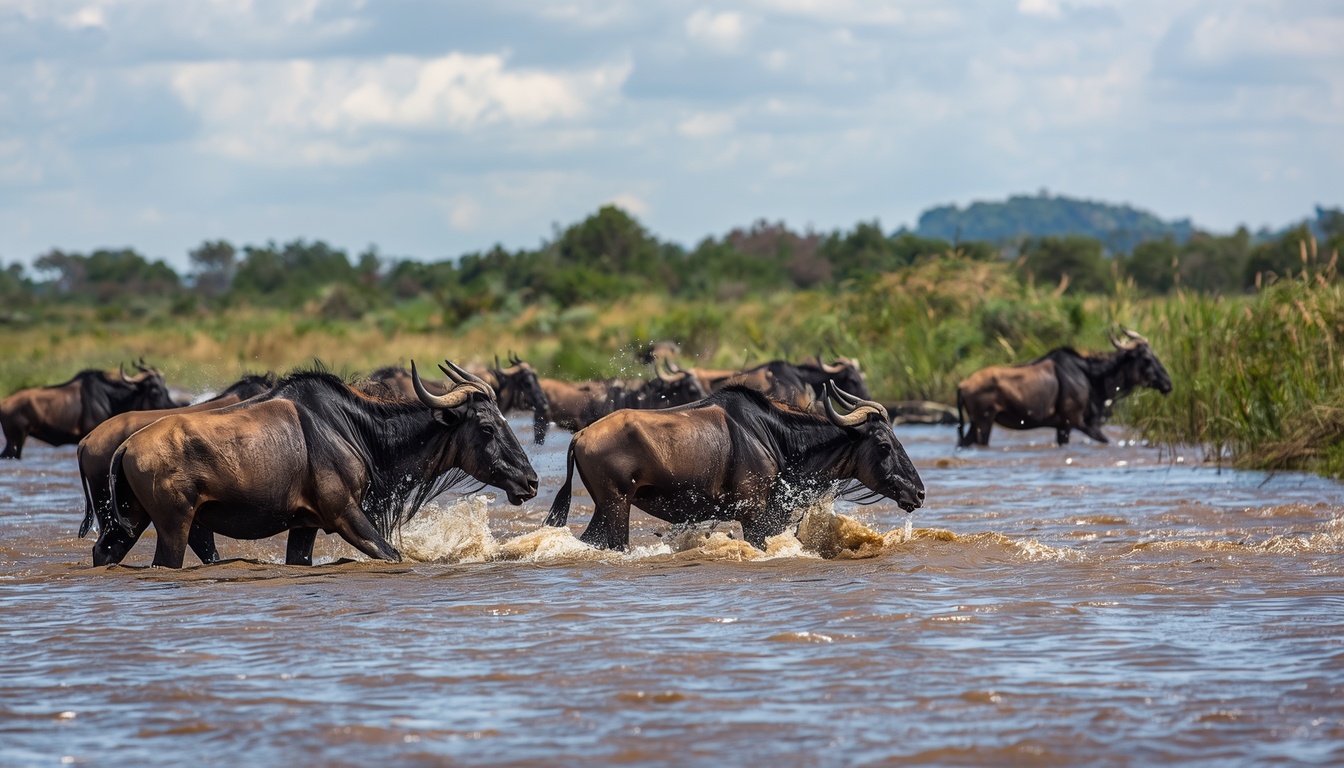
The Great Migration is one of the most spectacular wildlife events in the world, but among all its stages, the wildebeest migration Mara River crossing is considered the most dangerous and dramatic. Every year, millions of wildebeests travel across the Serengeti and Maasai Mara ecosystems in search of greener pastures and water sources. During this journey, they must cross the dangerous Mara River, where survival becomes a daily challenge.
This incredible natural event attracts wildlife photographers, safari travelers, and researchers from around the globe because it showcases the raw reality of survival in the wild.
Understanding the Mara River Crossing
The wildebeest migration Mara River crossing typically occurs between July and October as herds move from Tanzania’s Serengeti National Park into Kenya’s Maasai Mara Reserve.
Thousands of wildebeests gather along the riverbanks before making the risky decision to cross. Although the crossing is necessary for survival, it exposes the animals to multiple dangers, including predators, strong river currents, steep banks, and stampedes.
Why the Mara River Crossing Is So Dangerous
1. Crocodile Attacks
One of the biggest threats during the wildebeest migration Mara River crossing is the presence of massive Nile crocodiles waiting beneath the water surface.
These predators take advantage of the chaos and attack vulnerable wildebeests as they struggle through the river. Some crocodiles can remain motionless for hours before suddenly launching powerful attacks on crossing herds.
This predator-prey interaction is one of the reasons the river crossing has become one of Africa’s most dramatic wildlife spectacles.
2. Strong Water Currents
The Mara River is unpredictable and often has fast-moving currents, especially during rainy seasons. Many wildebeests become exhausted while swimming across the river.
Young calves and weaker animals are particularly vulnerable to drowning due to:
- Strong currents
- Deep water sections
- Slippery rocks
- Panic within the herd
These natural obstacles make the crossing extremely risky even without predator threats.
3. Steep and Muddy Riverbanks
Another major danger during the wildebeest migration Mara River crossing is the steep terrain surrounding the riverbanks.
As thousands of animals attempt to climb out of the river at the same time, overcrowding often leads to:
- Slipping and falling
- Broken limbs
- Trampling incidents
- Delayed escape from predators
- The muddy banks create confusion and panic among the herds, increasing mortality rates during peak migration periods.
4. Stampedes and Herd Panic
Wildebeests migrate in enormous numbers, and their survival instinct causes them to move collectively. However, this behavior can also become dangerous.
When one animal jumps into the river, others tend to follow instantly, creating massive herd stampedes. During the wildebeest migration Mara River crossing, panic spreads quickly, causing animals to collide, fall, or become trapped.
This chaotic movement contributes significantly to injuries and deaths during the crossing season.
5. Predator Pressure Beyond the River
The dangers do not end once wildebeests successfully cross the river. Predators such as lions, hyenas, leopards, and cheetahs often wait near crossing points to hunt exhausted animals.
Because the migration gathers huge concentrations of wildlife in one area, predator activity becomes extremely intense during this period.
The Role of Instinct in River Crossings
Despite the dangers, wildebeests continue crossing the Mara River every year because migration is essential for survival. Their movement is driven by:
- Seasonal rainfall patterns
- Search for fresh grazing land
- Water availability
- Herd instinct and movement patterns
This natural cycle has evolved over thousands of years and remains one of the most remarkable examples of wildlife adaptation.
Why the Mara River Crossing Fascinates Travelers
The wildebeest migration Mara River crossing attracts thousands of safari visitors because it offers a rare chance to witness nature in its purest form.
Wildlife enthusiasts visit the Serengeti and Maasai Mara to experience:
- Massive herd movements
- Predator hunting behavior
- Intense survival scenes
- Unique wildlife photography opportunities
- Real-time migration events
The unpredictability of the crossings makes every safari experience unique.
Conservation and Ecosystem Importance
The Mara River crossing is not just a tourist attraction—it is also a vital part of the East African ecosystem. The migration supports predator populations, nutrient cycling, and biodiversity across the Serengeti-Mara ecosystem.
Conservation efforts are critical to protecting migration routes, water systems, and wildlife habitats from environmental threats and human interference.
Final Thoughts
The wildebeest migration Mara River crossing is one of the most dangerous yet extraordinary events in the natural world. From crocodile attacks and strong currents to stampedes and predator ambushes, every crossing becomes a powerful test of survival.
Despite the risks, millions of wildebeests continue this journey each year, making the Great Migration one of nature’s greatest spectacles. For wildlife lovers, photographers, and safari travelers, witnessing the Mara River crossing remains an unforgettable experience that highlights both the beauty and brutality of the wild.


Leave a Reply